
AI-Powered Patient Recruitment for Clinical Trials
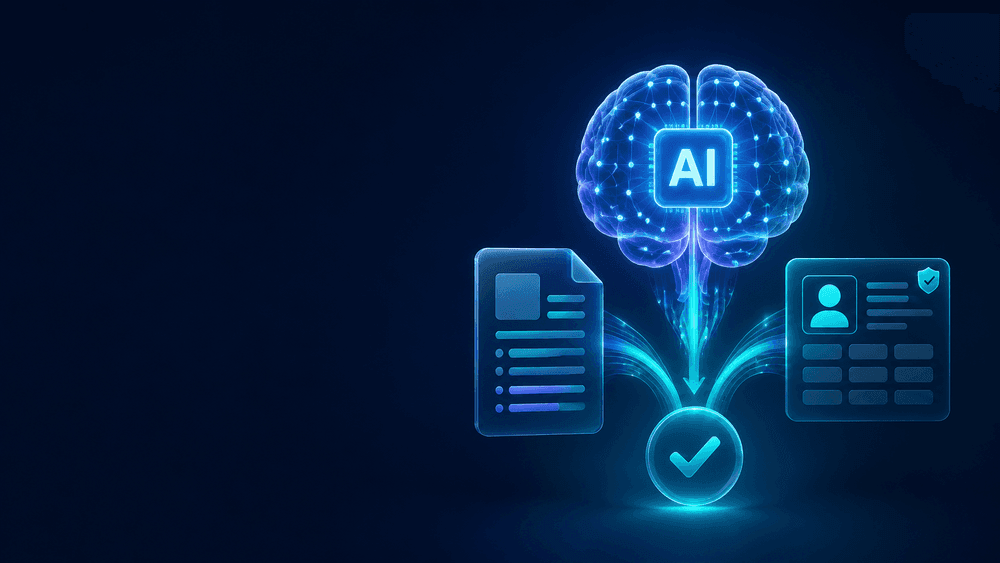
Patient recruitment remains one of the most persistent problems in clinical research. Sponsors and CROs identify promising investigators, activate sites and run recruitment campaigns, and still struggle to enrol enough eligible participants inside the planned timeline.
The problem is usually not that eligible patients do not exist. It is that finding them across fragmented clinical records, complex eligibility criteria and large patient populations is slow, manual work.
AI-assisted recruitment gives sponsors, CROs, research sites and health systems a faster path from protocol eligibility criteria to patient screening. It also produces the patient-population evidence that site selection and feasibility decisions should be based on.
The Problem: Finding The Right Patient Is Still Highly Manual
A protocol can carry dozens of inclusion and exclusion criteria covering diagnosis, disease stage, laboratory values, medications, prior treatments, comorbidities, demographics, biomarkers, imaging findings and clinical history.
Research teams work through patient lists, physician referrals, medical records and screening logs by hand to find candidates. In oncology, rare disease, cardiovascular and specialty trials, where the criteria are most specific, the manual effort is highest.
Even hospitals with large patient populations struggle to answer a basic question: which of our patients could qualify for which of our active trials?
Slow recruitment raises study cost, creates under-performing sites, delays database lock and ultimately pushes back regulatory submission and market access.
The Technology Solution
A clinical trial recruitment platform converts protocol eligibility criteria into structured, machine-readable screening logic and compares that logic against permitted patient data.
Structured fields such as diagnoses, medications, laboratory results, procedures and demographics are matched directly. Natural language processing and large language models extract the criteria that only exist in unstructured clinical notes, pathology reports and imaging narratives, for example performance status, prior lines of therapy or a documented contraindication.
Potential matches are presented to authorised clinical staff for review. The platform never determines eligibility; it ranks candidates and shows, criterion by criterion, the evidence behind each match.
The workflow looks like this: Protocol uploaded → Eligibility criteria extracted → Patient population screened → Potential matches ranked → Research team reviews candidates → Pre-screening initiated.
As patient records change, the platform keeps screening, so newly eligible candidates surface across all active studies rather than only at the moment a study opens.
Key Capabilities
- AI extraction of protocol inclusion and exclusion criteria
- Automated patient-to-trial pre-screening
- EHR and clinical data integration (FHIR R4, bulk export, CDW)
- Structured and unstructured medical record analysis
- Eligibility matching and candidate ranking
- Explainable matching against each individual criterion
- Site-level recruitment opportunity dashboards
- Screening funnel and recruitment analytics
- Investigator and research coordinator alerts
- Human validation before any patient outreach
- Privacy, security and role-based access controls
Business Impact
AI-assisted recruitment removes most of the manual effort of finding potential participants, and it does so continuously rather than in one-off chart reviews.
Sponsors and CROs gain visibility into recruitment opportunity across sites. Investigators identify potentially eligible patients earlier. Research coordinators spend less time searching records and more time on screening visits and consent.
For clinical development organisations the outcomes are faster patient identification, higher site productivity, less wasted screening effort, better recruitment forecasting and shorter trial timelines.
The same matching logic supports feasibility planning: before sites are selected, the platform can estimate whether a participating institution actually has enough potentially eligible patients to justify activation.
Build AI-Powered Clinical Recruitment Platforms With Nirmitee
Nirmitee designs and engineers custom patient recruitment and clinical trial intelligence platforms for pharma, biotech and CROs and research teams, integrated with existing clinical data and research workflows. Our clinical and R&D AI work spans protocol intelligence, eligibility matching, site dashboards and recruitment analytics, and the recruitment, patient-pool and pre-screening modules of Clinera give teams a starting point rather than a blank page.
Turn complex eligibility criteria into intelligent patient discovery. Talk to our team about screening your first protocol.
Frequently Asked Questions
Can the system decide that a patient is eligible for a trial?
No, and it should not. The platform pre-screens: it ranks potentially eligible patients and shows the evidence for each criterion. Final eligibility is determined by the investigator against the protocol, and no patient is contacted until an authorised member of the research team has validated the match.
How does it handle criteria that only appear in free-text notes?
Criteria such as ECOG performance status, prior lines of therapy, a documented allergy or a historical procedure are extracted from notes and reports using NLP and large language models. Each extraction is shown with the source snippet and a confidence level, so the reviewer confirms it rather than trusting a hidden score.
How is patient privacy protected under HIPAA and GDPR?
Screening runs inside the site's or health system's own environment, or on de-identified data when the purpose is feasibility counting. Identified data is visible only to authorised site staff under the existing IRB or ethics approval, access is role-based and logged, and consent is obtained before any contact. No patient data is used to train shared models.
Does it integrate with Epic or Cerner, or do we need a data export?
Both paths work. Where the EHR exposes FHIR R4 APIs or bulk FHIR export the platform reads directly; otherwise it works from clinical data warehouse extracts, registries or EDC data. The integration approach is chosen per site so that the first site does not become an IT project.
How does this help sponsors and CROs, not only sites?
The same matching logic gives sponsors and CROs potentially eligible patient counts per site before selection, screening funnel analytics during the study, recruitment forecasts against enrolment targets and alerts when a site's pipeline dries up, which is exactly the evidence that feasibility questionnaires cannot provide.


