
5 Signs Your Research Workflow Needs Digital Transformation
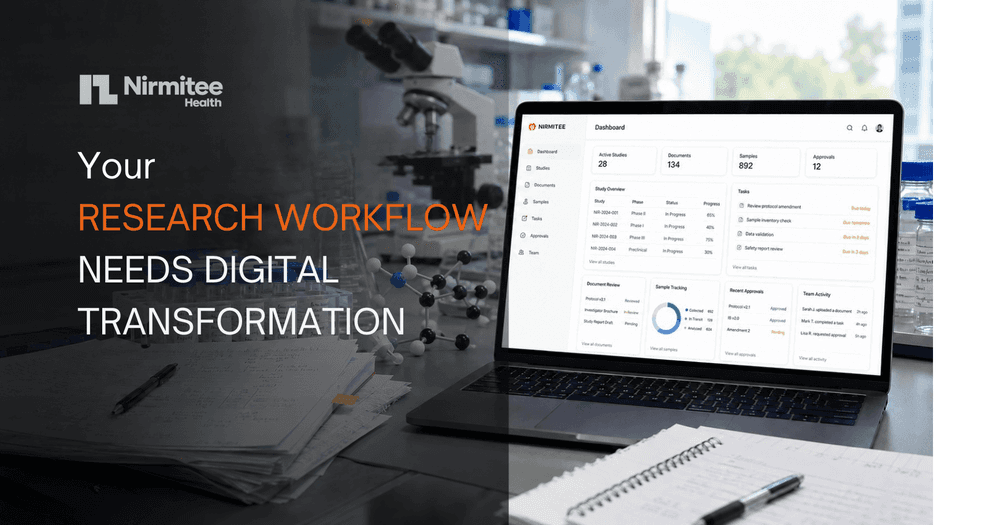
Clinical research is becoming increasingly complex, with growing demands for high-quality data, faster study execution, regulatory compliance, and timely publication of results. Yet many research teams continue to rely on paper-based processes, spreadsheets, and disconnected systems that can slow progress and create unnecessary challenges.
If your team is facing any of the following issues, it may be time to consider a digital transformation of your research workflow.
1. You're Still Relying On Paper-Based Data Collection
Paper Case Report Forms (CRFs) have long been a standard part of clinical research. However, paper-based workflows are often associated with missing data, transcription errors, delayed data entry, and increased administrative burden.
Research teams spend valuable time transferring information from paper forms into spreadsheets or databases, creating opportunities for errors and inconsistencies. Digital data capture through electronic CRFs (eCRFs) removes the transcription step, ensuring data is captured accurately and made available for analysis in real time.
2. Participant Follow-Up Is Difficult To Manage
Maintaining consistent participant follow-up is critical for generating reliable research outcomes, especially in longitudinal studies, disease registries, and Real-World Evidence (RWE) research.
If your team depends on manual reminders, phone calls, or spreadsheets to track participant visits, follow-ups can quickly become difficult to manage. Missed visits and incomplete data can impact study quality and outcomes.
Digital research platforms help automate participant tracking, visit scheduling, and follow-up management, improving retention and reducing the risk of missing data.
3. Data Quality Issues Keep Slowing Down Your Study
Data cleaning often consumes a significant portion of a study timeline. Missing fields, inconsistent entries, duplicate records, and delayed query resolution can create bottlenecks throughout the research process.
If your team frequently spends weeks or months correcting data before analysis, it may indicate that your current workflow lacks built-in quality controls.
Modern Electronic Data Capture (EDC) systems include validation rules, automated checks, and real-time monitoring capabilities that help identify issues early and improve overall data quality.
4. Research Data Is Scattered Across Multiple Systems
Many institutions manage research data through a combination of paper files, spreadsheets, emails, and standalone databases. This fragmented approach makes it difficult to maintain a single source of truth and can complicate collaboration among investigators, coordinators, and research staff.
A centralized digital research platform allows all stakeholders to access the same study information, track progress efficiently, and collaborate more effectively throughout the research lifecycle.
5. Preparing Data For Analysis And Publication Takes Too Long
One of the most common challenges faced by research teams is transforming collected data into publication-ready evidence.
When datasets require extensive cleaning, formatting, and reconciliation before analysis, publication timelines can be significantly delayed. Structured digital workflows help generate standardized, analysis-ready datasets, enabling researchers to focus more on insights and less on administrative tasks.
Moving Towards A Digital Research Future
Digital transformation is no longer just a technology upgrade, it's a strategic investment in research quality, efficiency, and impact.
By adopting tools such as Electronic Data Capture (EDC), digital eCRFs, participant management systems, and ePRO solutions, research teams can reduce operational burden, improve data quality, and accelerate the path from data collection to publication.
As clinical research continues to evolve, institutions that adopt digital workflows will be better positioned to generate high-quality evidence, support innovation, and deliver meaningful research outcomes.
The future of clinical research is not just digital, it's smarter, faster, and more connected.
Frequently Asked Questions
Can we move from paper CRFs to EDC in the middle of a running study?
Yes, and long-running studies do it regularly, typically at a protocol amendment or a new enrolment wave. The existing paper data is either back-entered into the EDC or locked as a separate dataset and merged at analysis. The key is a documented migration plan: which visits switch over, how legacy data is reconciled, and how the audit trail covers both periods. Mid-study migration is far easier than teams expect; running eight more years on paper is harder.
Does an EDC system have to be 21 CFR Part 11 compliant, and what does that mean in practice?
If the study data may ever support a regulatory submission, yes. In practice Part 11 means the system keeps time-stamped audit trails of every change, controls who can access and edit what, supports electronic signatures, and is validated for its intended use. For academic and investigator-initiated studies it is still worth insisting on, because journals and collaborating sponsors increasingly ask how data integrity was maintained.
How long does it take to set up an EDC study compared to printing paper CRFs?
Paper looks faster on day one because forms can be printed immediately. A typical EDC study build, including eCRF design, edit checks and user testing, takes a few weeks depending on protocol complexity. That upfront time is repaid during the study: no transcription, queries resolved as data arrives, and a database that can lock weeks sooner because cleaning happened continuously instead of at the end.
What about sites with unreliable internet connectivity?
Connectivity is the most common objection to EDC in multi-site and emerging-market research, and it is solvable. Look for platforms with offline data entry that syncs when a connection returns, low-bandwidth web forms, and mobile capture. A hybrid model also works: high-connectivity sites enter directly while others complete worksheets and enter data in batches, with the EDC remaining the single source of truth.
Is EDC worth the cost for small academic or investigator-initiated studies?
Published comparisons of paper and electronic data collection consistently find that EDC lowers total data management cost per patient once transcription, printing, shipping, storage and query resolution are counted, even though paper has almost no upfront cost. For small studies the bigger factor is usually time: a workflow where data is clean at entry shortens the path from last patient visit to analysis and publication.


